
Conical Spring
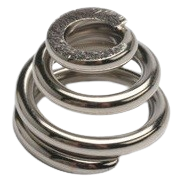
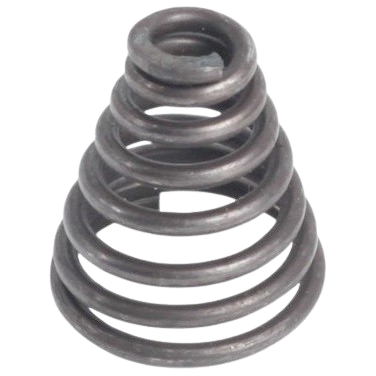
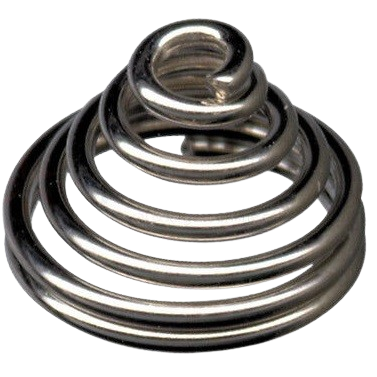
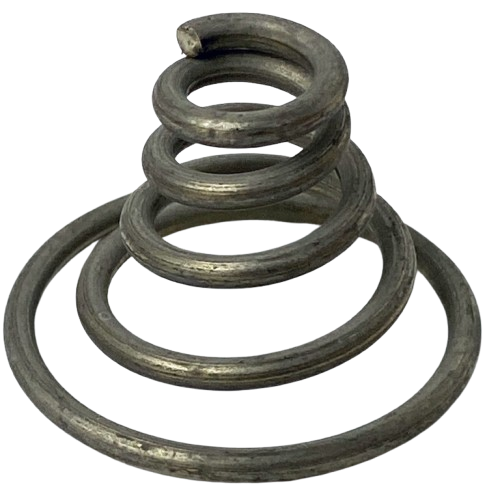
A Conical Spring is a tapered, cone-shaped compression type Spring made by winding wire in a spiral with a diameter that progressively decreases from one end to the other. This is helical coil compression Spring with outer diameters that decrease in a constant gradient from one end to the other. The diameter of this Spring is progressively increases as you approach the bottom and this is an open coiled helical type Spring that offers resistance to a compressive force applied axially.
Conical Spring manufacturer
Royal Spring Industries is the leading Conical Spring manufacturer up to the following capacity :
- Wire Dia. : upto 40 mm.
- Outer Dia. : upto 400 mm.
- Free height : upto 600 mm.
- Total coils : As per user’s requirement
- Load capacity : upto 30 Tons. (per pc.)
Raw-material grades used : BS:970, EN-42, BS:970, EN-45, BS:970 EN-47, 50Cr.V4, 50Cr.4V2, 51Cr.V4, 50Cr.MoV4, 50Si7, 55Si7, 60Si7, SUP-9, SUP-9A, SAE-5160, IS:4454 Part-1 Grade-2, IS:4454 Part-1 Grade-2D, Stainless Steel, others similar foreign grades JIS, ASTM etc.
Conical Spring application
Conical Spring is primarily used where space is constrained, such as electrical components, automobile suspension and industrial machinery due to it’s limited height which increase stability. Reducing height is the main purpose of using Conical Spring. Know some details of Conical Spring application here :
Industrial machinery : Conical Spring’s application is found in assemblies where space limitations are critical. For instance, in conveyor systems, Conical Springs play a pivotal role in ensuring smooth operation by absorbing shocks and vibrations, thus enhancing the overall durability and reliability of the machinery.
Automotive sector : Conical Spring is use in suspension systems, where they help to maintain vehicle stability and ride comfort. Their capability to provide gradual resistance to compression across their travel distance helps to smooth out bumps and uneven surfaces when driving.
Aerospace industry : Conical Springs are used into various systems to ensure lightweight and efficient designs. It’s applications can be seen in landing gear mechanisms, where they play a critical role in absorbing landing shock and providing stability during takeoff and landing.
Mechanical application : By providing consistent force under changing loads, Conical Springs application is found stand out as crucial components in mechanical applications, demonstrating both versatility and reliability across industries.
Medical device : Conical Springs are used in devices such as surgical instruments and diagnostic equipment. The precision and reliability of these Springs are paramount in ensuring that medical equipment operates effectively, as the slightest malfunction can have significant consequences.
Kitchen gadgets : Conical Springs are used in various appliances such as food processors and blenders. These Springs are utilized to maintain tension and allow for smooth operation of components, ensuring that the blades and mechanisms work effectively during food preparation.
Furniture : Conical Spring plays a crucial role in adjustable seating options. Many office chairs and recliners incorporate these Springs to enable height adjustments and tilting features. The uses of Conical Spring enhances user comfort, as individuals can customize their seating position to suit their ergonomic needs.