
Helical Coil Spring Manufacturer
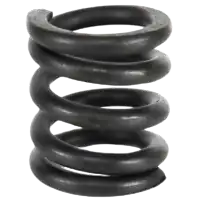
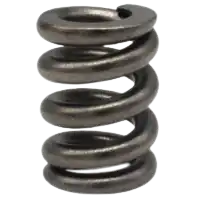
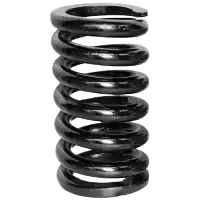
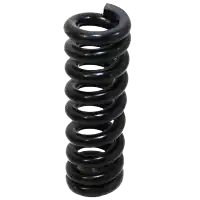
Royal Spring Industries is the leading Helical Coil Spring manufacturer with 25 years of experience in Global market having quality certification ISO 9001 : 2015 and maintains all international manufacturing & quality standards.
Our Helical Coil Spring manufacturing capacity
Helical Coil Spring can be manufactured upto most heavy duty. As Helical Springs are tailor made or can be customized in design, users can manually decide the dimension according to their requirements, based on load bearing capacity and allowed space to install. We here by furnish our maximum manufacturing capacity of Coil Springs as below :
- Wire : Bar Dia. capacity is upto 70 mm.
- OD : Outer Dia. capacity is upto 500 mm.
- Height : Length or free height capacity is upto 1000 mm.
- Coils : Turns are made as per user’s requirement / specification
- Load : Each Spring can carry upto 40 Tons. per pc.
- Section : Round and Square wire section can me manufactured
Types of Helical Coil Spring we manufacture
Helical Coil Springs are mechanical devices widely used in various industries due to their unique design and functionality. The most common types include Compression, Tension and Torsion. Their versatility in various types makes them suitable for different applications. They comes in several shapes and sizes, tailored to meet specific requirements.
Compression : This type of Helical Coil Spring mechanical Spring that is designed to resist axial loads applied along its length. These type of Coil Springs are engineered to compress under load, storing potential energy, which is then released when the load is removed. The design specifics, such as wire diameter, coil diameter and number of active coils, determine the Helical Compression Spring’s overall strength and compression characteristics. This structure allows Springs to absorb shock and maintain their original shape after deformation. Compression Springs invaluable in various applications. They are commonly used in Railway Bogie Suspension, Automobile suspension, heavy duty machinery etc. They can be customized in design according to applicable load and area where it will be used.
Tension : This type Helical Coil Spring is designed to absorb and store energy by resisting stretching. The primary function of these Helical Springs are to create a pulling force, which occurs when they are elongated or stretched. Tension Springs are specifically engineered to resist tensile forces. The defining characteristic of Tension Coil Spring is their ability to return to their original shape once the load is removed. This characteristic is essential for applications where consistent performance is required, making them ideal for safety mechanisms, hardware components and various other uses. Tension type Helical Spring plays an integral role in the functionality of various mechanisms. For instance, in the automotive industry, they are commonly found in door latches and throttle linkages, ensuring secure closures and responsive acceleration.
Torsion : This type Helical Coil Spring is specialized mechanical components designed to store energy when twisted. Unlike Compression and Tension Springs, Torsion Coil Spring works by applying torque over a rotational axis. Torsion Helical Springs are made from coiled metal wire, which is formed into a helical shape. The ends of the Spring are attached to different components, allowing the spring to exert a torque when twisted. It’s applications found in clothespins, where a Torsion Coil Spring allows the jaws to open and close effortlessly. Similarly, in garage doors, torsion springs enable the door to lift smoothly and securely, providing vital support and functionality.
Helical Coil Spring manufacturing process
Helical Coil Spring manufacturing process involves several crucial steps that ensure the final product meets stringent quality standards. The process begins with raw material procurement to delivery undergoes with the precision steps according to international standards.
By adhering to these meticulous processes, manufacturers can produce high-quality springs that fulfill the diverse needs of their customers. Follow the manufacturing flow chart as described below :
Raw-material procurement : High carbon steel is one of the most frequently used raw-material for Helical Coil Springs due to its excellent tensile strength and fatigue resistance. This type of steel contains a higher percentage of carbon, which contributes to its resilience and makes it suitable for applications. Stainless steel is another popular raw-material choice for Helical Coil Spring, especially in environments subject to corrosion or exposure to chemicals. Helical Springs made from stainless steel are ideal for use in marine, medical, and other corrosive environments. Alloy steels, which combine various elements with steel, also play a crucial role in the production of Helical Coil Springs. The precise choice of Alloys will depend on the intended application of the Helical Spring and the performance requirements it must meet.
Making design : The dimensions of a Helical Spring plays a critical role in determining its performance. The overall length of the Spring, as well as the height of each coil, must be tailored to fit the specific application it is intended for. Another essential factor is the coil diameter. Choosing the correct coil diameter is vital as it directly affects the Spring’s flexibility and how it interacts with other components in the assembly. The wire diameter is equally important, as it determines the strength and resilience of the Helical Spring. A thicker wire typically results in a sturdier Coil Spring, capable of handling higher loads, while a thinner wire may allow for greater flexibility. The number of active coils within the spring contributes significantly to its load-bearing capacity. More active coils can distribute forces more evenly, which enhances the longevity of the spring under stress.
Bending and forming wire : The preparation stage of Helical Coil Spring manufacturing is crucial, as it lays the groundwork for effective Spring functionality. The wire is typically cut to predetermined lengths before entering the bending process. This is vital for achieving the desired Spring properties. Following the cutting process, the wire undergoes bending and forming. The bending technique employed is of significant importance; common methods include rotary bending and compression bending. Precision in this stage is paramount to ensure that the coils are uniform and free from deformities, which can adversely affect the overall functionality of the Helical Coil Spring.
Heat treatment process : The heat treatment process is essential in enhancing the mechanical properties of Helical Coil Springs. This procedure typically involves three main stages: annealing, quenching and tempering, each serving a specific purpose to ultimately improve the strength, ductility and hardness of the Spring. Initially, annealing is performed to relieve internal stresses and improve the material’s ductility. During this stage, the Helical Coil Springs are heated to a predetermined temperature and held there for a specified time. After this period, they are gradually cooled at a controlled rate, either in air or within a furnace. The second step, quenching, involves rapidly cooling the Coil Spring after heating them to a high temperature. This is often accomplished by immersing the Spring in a cooling medium such as water or oil. The purpose of quenching is to harden the material by transforming its micro structure into a more robust phase known as martensite. Lastly, tempering is crucial to modify the characteristics of the hardened Spring. In this process, the Springs are reheated to a temperature below that of the quenching phase and then cooled again. This process alleviates some of the internal stresses created during quenching and enhances the ductility.
Surface treatment and finishing : The surface treatment and finishing of Helical Coil Spring plays a crucial role in enhancing their performance and longevity, particularly in demanding environments. Among these methods, shot peening is one of the most common techniques applied to increase fatigue resistance. Another essential aspect of finishing is the application of coatings or plating. Coatings serve as a protective layer against environmental elements, significantly enhancing corrosion resistance. Options include epoxy, zinc and chrome plating, each selected based on the specific application requirements of the Coil Spring. The final step in the finishing process often involves polishing, ensuring a smooth surface finish that not only enhances the aesthetic appeal but also reduces wear during operation.
Heavy duty Helical Coil Spring suppliers
We are OEM heavy duty Helical Coil Spring supplier for various Industrial & Machinery applications where the vibration & shocks are available and Springs are necessary to protect the appliances. We supply Helical Spring for the following sectors :
Railway : Bogie Coil Springs are primarily used to support the weight of the train while allowing for flexibility and movement.
Automobile : Automotive Coil Spring supports the vehicle’s weight, reduces jerking, keep stability and produces riding comfort.
Vibrating screens : Compression Springs play a crucial role in isolating vibrations and reducing noise, thus enhancing performance.
Crushers : Coil Springs are utilized in Crushers to absorb shocks during the crushing process, ensuring that the machine operates smoothly.
Valves : Helical Springs provide the necessary force to close and open the valve components, ensuring proper fluid control without leakages.
Pipe support : Compression Coil Springs are used to maintain the position of pipes while allowing for thermal expansion and vibration damping.
Elevators : Coil Compression Springs play a crucial role here, ensuring a smooth ride and the ability to handle heavy loads intermittently.
Vibration Isolators : Heavy duty Coil Springs help to reduce noise and damping from vibrations, providing a more comfortable environment.
Piling machines : Helical Spring contribute to the machinery’s ability to drive piles into the ground by absorbing shocks and providing stability.